
Your next leaders are already on the payroll. Build them before you need them.
Guide Forward™ is the emerging leaders program for community banks: Guide Yourself™ plus six sessions built for leading without a title, with written commitments and weekly inspection, so your rising people lead before the title arrives.
Why most emerging leaders programs produce certificates, not leaders
A bank picks ten promising people, sends them through a year of monthly classes and hands out certificates. Eighteen months later three have left, two supervise the way their old boss did, and the rest are still waiting to be told what to do. The content was fine. Nothing was installed. At the window on Friday, a teller supervisor holds a missed commitment with a former peer instead of taking the work back.
What an emerging leaders program should install
Emerging leaders do not need more information about leadership. They need to govern their own behavior under pressure before they are responsible for anyone else's.
Own the standard.
Recover without rescuing.
Lead without the title.
How Guide Forward runs
Guide Forward runs twelve live three-hour sessions over about nine months, one every three weeks, as a private cohort of eight to twelve from one bank. Sessions one to six are Guide Yourself, the same foundation every CBI leader installs: how each person governs their own behavior under pressure. Sessions seven to twelve are built for people who lead without a title: leading up, influence without authority, holding a standard as a peer, culture, the weekly cadence and recovery. Graduates are Guide Forward graduates with Guide Yourself complete; when they take a team, Guide the Leader™ makes them Certified GDD Leaders.
Between sessions each participant applies one behavior at work, writes down the commitment, and reports back on what held and what drifted. The executive sponsor sits in the first and last sessions, and each participant's own manager inspects the commitment weekly, so the program runs inside the bank's rhythm.
The private cohort is the stronger choice for a bank with eight or more emerging leaders: they hold each other to one standard and the bank watches its own bench for nine months. Fewer than eight? Ask about the next mixed cohort.
See GDD Leader Certification · Guide Yourself · Succession planning
Free download: The Task Got Done. Nothing Changed. The ten-second test for whether you assigned a task or installed a behavior. (Free PDF, 10 pages, email required)
Who to put in it
Pick people for how they already behave, not for tenure. The teller supervisor everyone goes to when the line is long. The lender who tells a borrower no and keeps the relationship. The analyst who fixes the process instead of the symptom. Those are emerging leaders whether or not a title says so.
Tell each participant why they were chosen and what the bank expects after: a written commitment, weekly inspection with their manager, and a conversation with the sponsor at the end about what comes next. People who know the program leads somewhere stay.
Run the free DriftCheck™ with each participant before session one and after session twelve. The difference is the first evidence that the program installed something, and it is evidence a board understands.
The twelve sessions
Guide Yourself, sessions 1 to 6
1. Why leaders step in
What gets installed: each leader names the default they fall into when pressure rises, drive, rescue or avoid, and the moment it shows up, the busy Friday, the late loan file, the top producer who cuts corners.
Between sessions: three weeks of noticing the trigger and logging it, in writing.
2. Define winning
What gets installed: one Primary Result and one Guardrail for the leader's own role, in a sentence a teller could repeat.
Between sessions: say it to the team on Monday; record who can repeat it on Friday.
3. Lock the standard
What gets installed: three observable behaviors that define the standard for the leader's team, written so anyone could inspect them.
Between sessions: post the standard and inspect it twice.
4. Hold under pressure
What gets installed: the two or three moments each week when the leader is most likely to let it slide, and the sentence they will use instead.
Between sessions: hold the standard once when it costs something; write down what happened.
5. Name the drift
What gets installed: the drift signals, late, shorter, quieter, excused, and the habit of naming drift in the open within 24 hours.
Between sessions: name one drift to one person.
6. Reset tolerance
What gets installed: the recovery conversation in four moves, what is the standard, where is the drift, what will you do, how will I know.
Between sessions: run it once on a real miss and bring the record to session seven.
Guide Forward, sessions 7 to 12: leading without the title
7. Leading up
What gets installed: how to bring a problem to your manager with the standard, the drift and your proposed move already written, so the conversation takes five minutes instead of a meeting.
Between sessions: take one real issue up the chain in that form and record the response.
8. Influence without authority
What gets installed: the three moves that get a peer in another branch or department to act when you cannot direct them: name the shared win, make the ask specific, agree how you will both know.
Between sessions: move one cross-department item that has been stuck.
9. Tolerance as a peer
What gets installed: how to name a slipped standard to someone you do not manage, the lender who skips the follow-up, the teller who shortcuts the hold, without becoming the branch police.
Between sessions: name one drift to one peer within 24 hours.
10. Culture is what you tolerate
What gets installed: how to read a branch's culture from what gets excused, and how to reset one tolerated behavior from any seat by changing what you do first.
Between sessions: pick one tolerated behavior you take part in and stop; record who noticed.
11. The weekly cadence
What gets installed: your own Monday Morning Implementation: a scoreboard that answers "Are we winning?" and commitments that answer "What did we do about it?", brought into your manager's Monday meeting.
Between sessions: run it three weeks in a row and bring the record.
12. Recovery and the personal operating system
What gets installed: the four-move recovery for your own misses, name the drift, restate the standard, reset, and the habits that keep you consistent when the title arrives.
Capstone: one drift you fixed, presented to the executive sponsor.
Three weeks between sessions. Every commitment is written and inspected by the participant's own manager, so the bank sees the behavior, not an attendance list.
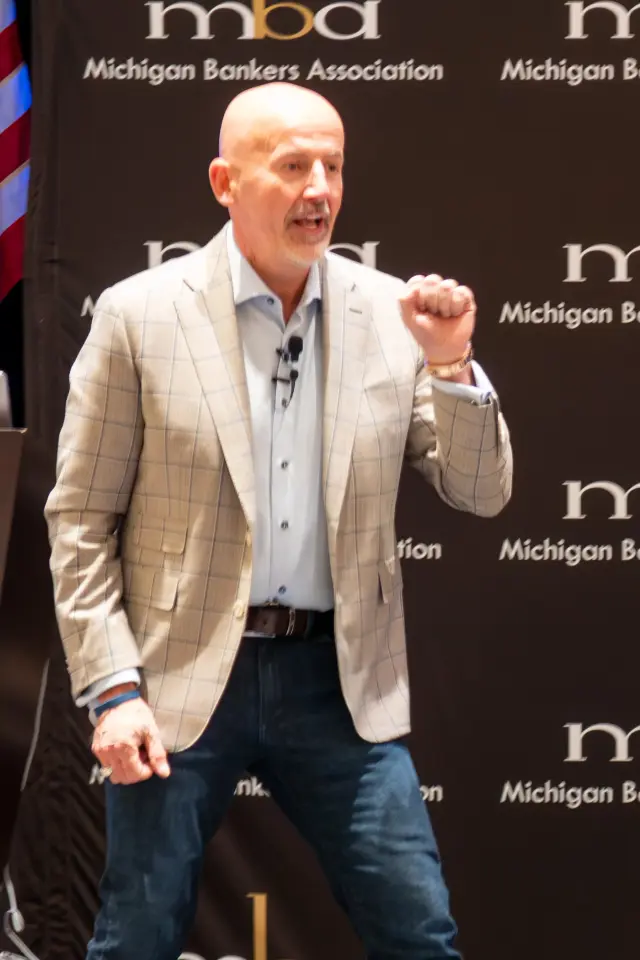
We've sat on your side of the table.
Your rising people were hired for how they behave. Somebody has to install how they lead before the bank needs them to.
Steve Lowisz has spent three decades alongside community banks as a board director and advisor: 150+ community banks advised, 24+ today. He founded Guide, Don't Drive™, the Human Performance Operating System™, and runs every cohort himself.
1 Client approved public use of the result but not its name. Growth reflects many factors and is not attributed solely to CBI.
Which offer fits
Guide Forward is a private cohort for eight to twelve rising people.
Included, nothing extra
- Written commitments
- The weekly inspection template
- DriftCheck before session one and after session twelve
- The sponsor sessions
- Guide Yourself complete, credited toward GDD Leader Certification
1 One client bank, shared with permission. Not the same bank as any testimonial shown. Results vary and are not promised.
Three steps to leaders who are ready before you need them.
Book 30 minutes with Steve.
Bring eight to twelve names.
DriftCheck each candidate and set the cohort.
Pick the sponsor, the start date and the on-site or online format.
Twelve sessions over about nine months, inspected weekly.
Each graduate presents one drift they fixed to the sponsor.
Common questions
How long is the emerging leaders program?
Twelve three-hour live sessions over about nine months, one every three weeks, with one applied behavior between sessions.
Is it run on site or virtually?
Both. Private cohorts run at your bank or online.
How many people should we send?
Eight to twelve for a private cohort. Fewer than eight? Ask about the next mixed cohort.
How do we know it worked?
Written commitments are inspected weekly by each participant's own manager, DriftCheck scores are taken before session one and after session twelve, and the sponsor reviews both. You get a record of what each person did differently, not a satisfaction score.
What does it cost?
$6,000 per seat for a private cohort of eight to twelve from one bank, so $48,000 to $72,000. Fewer than eight? Ask about the next mixed cohort.
How is Guide Forward different from GDD Leader Certification?
Same foundation, different second half. GDD Leader Certification's sessions 7 to 12 install the standard in a team you already lead. Guide Forward's sessions 7 to 12 install influence and standards without a title. Guide Forward graduates finish GDD Leader Certification later with Guide the Leader.
Start with the people you already trust.
Bring eight to twelve names to a 30-minute call. Steve will tell you which cohort fits and what to expect from each person by session six.